
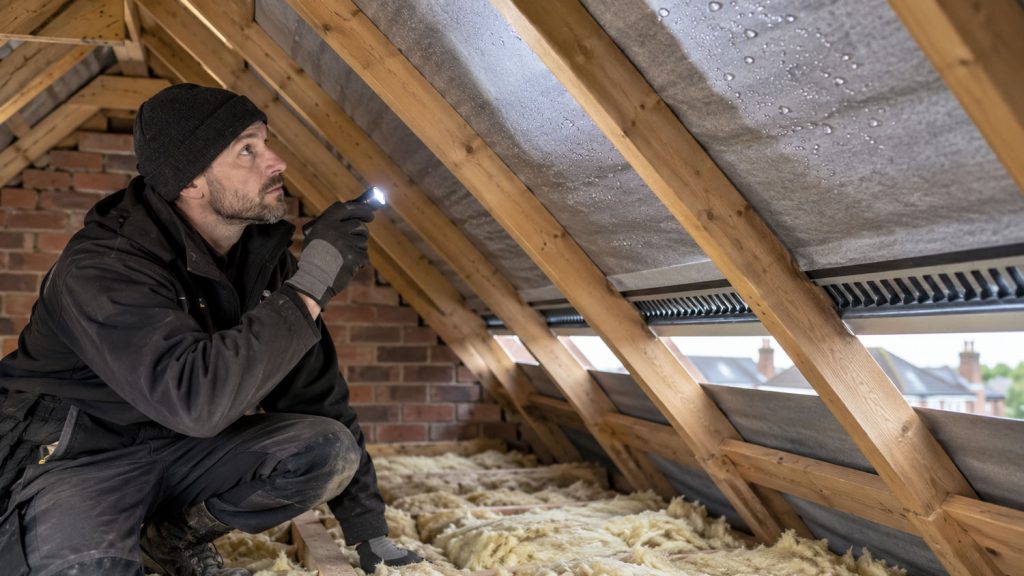
Why Roof Ventilation Matters: How to Prevent Condensation in Your Stafford Loft
When people think about roofing problems, they usually think about rain getting in.
But not every damp roof space is caused by a leak.
Condensation can build up inside a loft when warm, moist air from the home rises into a colder roof space and has nowhere to escape. Over time, this can leave roof timbers damp, encourage mould growth and make insulation less effective.
It can be particularly noticeable during the colder months, when there is a bigger temperature difference between the rooms below and the loft above.
For homeowners in Stafford, understanding the difference between a roof leak and condensation can save a lot of confusion.
What Causes Condensation in a Loft?
Everyday life creates moisture inside a home.
Cooking, showering, drying clothes and even breathing all add moisture to the air. Normally, ventilation throughout the property helps this moisture escape.
Problems can start when warm air reaches the loft and meets cold surfaces such as roofing felt, membrane or timber.
The moisture in the air can then turn into water droplets.
A small amount of condensation can occur occasionally without causing a major problem. However, regular or heavy condensation suggests that the roof space may not be ventilating properly or that too much moisture is finding its way into the loft.
What Does Loft Condensation Look Like?
Condensation can sometimes be mistaken for a leaking roof because the symptoms are quite similar.
You may notice:
- Water droplets underneath the roofing membrane or felt
- Damp roof timbers
- Black mould or mildew
- A musty smell in the loft
- Damp or compressed insulation
- Rusting nails or metal fixings
- Moisture appearing during cold weather even when it has not been raining
One clue is when the damp seems to appear across a wider area rather than around one particular tile, chimney or roof joint.
That does not automatically mean condensation is the cause, though. A proper inspection is the safest way to find out where the moisture is coming from.
Why Roof Ventilation Is Important
A roof needs to keep water out, but the space underneath it also needs to be able to deal with moisture generated inside the home.
Ventilation allows air to move through the roof space, helping moist air escape before it settles on cold surfaces.
Depending on the design of the roof, ventilation might be provided through areas such as the eaves, ridge or purpose-made roof vents.
Modern roofing systems may also use breathable membranes designed to help manage moisture within the roof structure.
The right solution depends on the property and how the roof has been constructed.
Simply adding random vents is not always the answer. Roof ventilation needs to work as a system.
Can Loft Insulation Cause Condensation?
Insulation itself is not usually the problem. In fact, properly installed loft insulation is an important part of keeping a home warm and energy efficient.
Problems can arise when insulation blocks ventilation at the eaves.
If insulation has been pushed tightly into the edge of the roof, it can prevent air from moving into the roof space.
This sometimes happens when additional insulation is fitted without considering how the roof is ventilated.
It is also worth checking that loft hatches fit properly and that extractor fans from bathrooms or kitchens are not simply releasing warm, damp air into the loft.
Is It Condensation or a Roof Leak?
It is not always easy to tell from inside the loft.
A roof leak may only appear during certain wind directions or particularly heavy rain. Water can also travel along roofing materials or timber before becoming visible somewhere else.
Condensation, on the other hand, often becomes worse during cold weather and may appear across several areas of the roof.
That is why looking at one damp patch does not always tell the full story.
An experienced roofer can inspect the roof covering, flashing, valleys, ridge and other vulnerable areas while also looking for signs of poor ventilation inside the loft.
What Happens If Loft Condensation Is Ignored?
Persistent moisture is something worth dealing with.
Roof timbers are designed to remain relatively dry. If they stay damp for long periods, there is an increased risk of mould and timber deterioration.
Wet insulation can also become less effective, while mould growth can spread around the roof space.
The earlier the cause is identified, the easier it usually is to prevent further damage.
Ventilation During a New Roof Installation
If a roof is being replaced, it is a good opportunity to look at ventilation at the same time.
Modern breathable membranes, ventilation products and mechanically fixed roofing systems can all form part of a properly designed roof.
The exact specification depends on the type and age of the property.
Rather than simply replacing what was there before, a good roofer should consider how the complete roof will work once the new covering is installed.
Roof Ventilation for Homes in Stafford
Stafford has everything from older traditional properties to modern estates, extensions, converted loft spaces and homes that have been altered several times over the years.
That means there is no single ventilation solution that suits every roof.
If you have noticed moisture, mould or condensation in your loft, it is worth finding out what is actually causing it before spending money on unnecessary repairs.
At A Stevens, we carry out roofing work throughout Stafford and the surrounding areas. We can inspect your roof, look for possible water entry points and advise you if ventilation or another roofing issue needs attention.
If something does need doing, we’ll explain the options clearly and give you a free, no-obligation quote.