
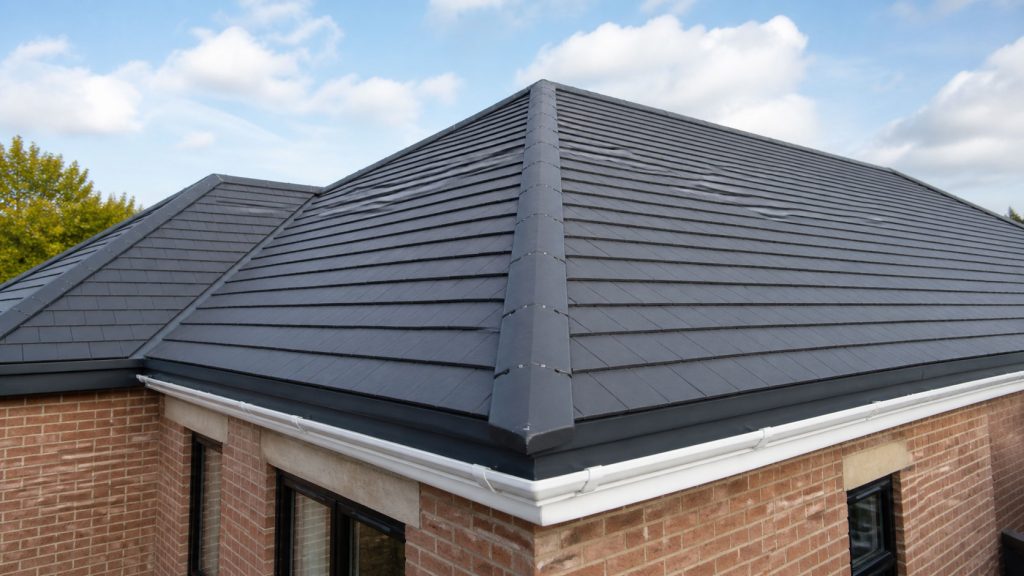
If you’ve had roofing work quoted recently, you may have heard the terms “dry ridge” and “dry verge”. They sound a bit technical, but the idea behind them is quite simple.
Traditional ridge and verge systems often rely on mortar. Over time, that mortar can crack, crumble or fall away because of wind, rain, frost and general weathering. Dry systems are designed to avoid many of those issues by using mechanical fixings instead.
For many homes, especially where old mortar is failing, dry ridge and dry verge systems can be a smart upgrade.
What Is a Dry Ridge System?
The ridge is the highest point of your roof, where two roof slopes meet. Traditionally, ridge tiles are bedded onto mortar to hold them in place and seal the gap beneath.
A dry ridge system uses screws, clamps, unions and a ventilated roll instead of relying on mortar alone. The ridge tiles are mechanically fixed, which helps keep them secure in bad weather.
This gives the roof a neat finish while also allowing ventilation beneath the ridge.
What Is a Dry Verge System?
The verge is the edge of the roof where the tiles meet the gable end of the house.
On older roofs, the verge is often finished with mortar. As with ridge mortar, this can break down over time. When it does, it can leave gaps, allow water in or make the roof edge look untidy.
A dry verge system uses interlocking caps fixed along the roof edge. These protect the tiles and create a clean, tidy finish without exposed mortar.
Why Do Mortar Systems Fail?
Mortar is strong when it’s first fitted, but it spends years exposed to the British weather.
Rain, wind, frost, sun and temperature changes all take their toll. Over time, mortar can crack, shrink or loosen. Once that happens, water can get into gaps, frost can make cracks worse and pieces may start to fall away.
This is especially common on older roofs or roofs that have had patch repairs over the years.
The Benefits of Dry Ridge and Dry Verge
Dry systems are popular for a reason. When fitted properly, they offer a number of useful benefits.
Better Weather Resistance
Because dry systems are mechanically fixed, they are not relying on mortar to hold everything together. This can make them more secure during high winds and heavy rain.
Lower Maintenance
Mortar often needs repairing as it ages. Dry systems reduce the need for repeated mortar patching, making them a lower-maintenance option over time.
A Cleaner Finish
Dry verge caps give the edge of the roof a neat and uniform look. Dry ridge systems also create a clean finish along the top of the roof.
Improved Ventilation
Many dry ridge systems include ventilation, which can help air move through the roof space. Good ventilation can reduce the risk of condensation building up in the loft.
Good for New Roofs and Upgrades
Dry ridge and dry verge systems can be fitted as part of a new roof installation, but they can also be added when old mortar has failed or during repair work where suitable.
Are Dry Systems Right for Every Roof?
Not always. Every roof is different, and the best option depends on the roof type, tile style and condition of the existing structure.
A roofer will need to check whether a dry system is suitable for your property. In many cases, it is a practical and long-lasting choice. In others, a different repair or finish may be more appropriate.
The key is to get proper advice before deciding.
How Do You Know If Your Ridge or Verge Needs Attention?
You may need ridge or verge work if you notice:
Cracked mortar
Loose ridge tiles
Missing mortar at the roof edge
Pieces of mortar on the ground
Gaps along the verge
Damp patches near the roofline
A roof edge that looks untidy or exposed
It’s best not to ignore these signs. Loose ridge tiles can be dangerous, and damaged verge areas can leave the roof vulnerable to the weather.
A Good Upgrade for Stafford Homes
With the amount of wind and rain roofs deal with throughout the year, dry ridge and dry verge systems are worth considering for homes in Stafford and nearby areas.
They can improve the look of the roof, reduce maintenance and help keep key roof areas secure.
At A Stevens, we install dry ridge and dry verge systems as part of our roofing and roofline services. We’ll take a look at your roof, explain whether a dry system is suitable and give you a clear, no-obligation quote.