
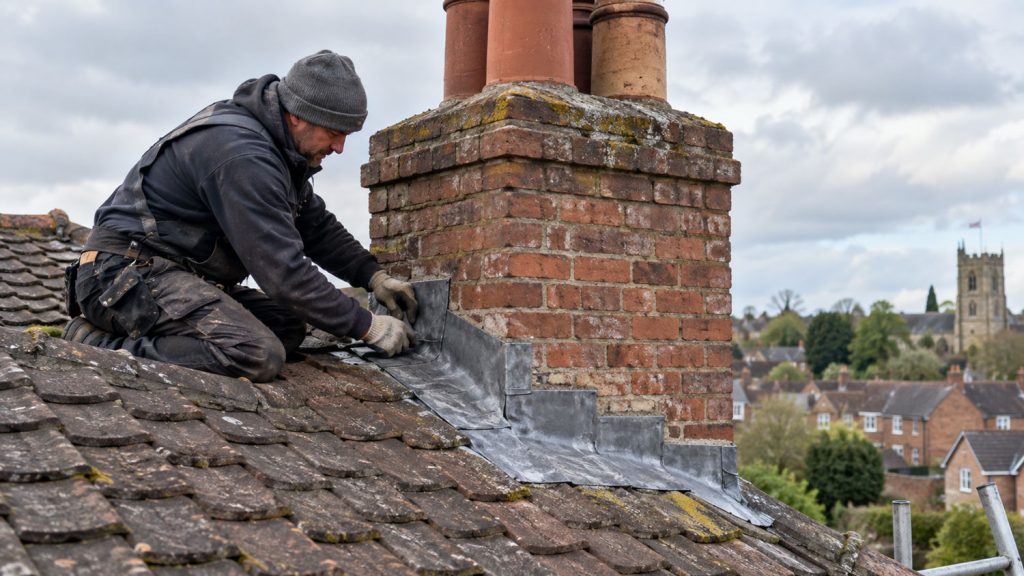
Chimney Leaks and Lead Flashing: What Stafford Homeowners Should Know
When water starts appearing on a ceiling near a chimney breast, it is easy to assume that there must be a hole in the roof.
Sometimes there is.
But chimneys themselves are also one of the areas where roof leaks commonly develop.
A chimney passes straight through the roof covering, which means several different materials have to meet and remain watertight. Tiles, leadwork, mortar and brickwork are all exposed to years of wind, rain, frost and temperature changes.
When one part begins to fail, water can find its way in surprisingly easily.
Why Are Chimneys Vulnerable to Leaks?
The main surface of a pitched roof is designed to shed water down towards the gutters.
A chimney interrupts that surface.
Water has to be directed safely around the chimney using carefully fitted flashing and other weatherproofing details.
If the flashing becomes damaged, mortar joints deteriorate or a previous repair has not been carried out properly, water may begin entering the roof.
The actual point where water becomes visible inside the house can sometimes be some distance away from where it originally entered.
What Is Lead Flashing?
Lead flashing is commonly used where a roof meets another structure.
Around a chimney, it creates a weather-resistant joint between the chimney and roof covering.
When properly installed and maintained, lead can provide long-lasting protection.
However, like any exposed roofing material, it can eventually require attention.
Leadwork may lift, split, become loose or pull away from the brickwork. Problems can also occur where old repairs have relied heavily on sealants or other short-term fixes instead of properly repairing the flashing.
Signs There May Be a Problem Around Your Chimney
One of the most obvious signs is a damp patch on a ceiling or wall close to the chimney.
You may also notice staining down the chimney breast, peeling paint or plaster, damp smells in the loft or visible moisture around the chimney timbers.
From outside, loose or damaged flashing may sometimes be visible from ground level.
Cracked mortar, weathered brickwork or damaged chimney pots can also indicate that the chimney needs closer inspection.
Never climb onto the roof to investigate it yourself. Working around a chimney involves height and potentially loose roofing materials, so it is much safer to have the area checked properly.
It Might Not Be the Flashing
Although flashing is a common suspect, it is not the only possible cause of water around a chimney.
The problem could be damaged tiles nearby, worn pointing, deteriorated brickwork or another roof detail further up the slope.
In some cases, water may be entering somewhere else entirely and travelling along timbers before appearing beside the chimney.
This is why simply covering an area with sealant is rarely a good way to diagnose a roof leak.
Finding the actual source matters.
Why Quick Patch Repairs Can Cause Problems
When a roof is leaking, the natural temptation is to stop the water as quickly as possible.
There are times when temporary protection is useful, but repeatedly covering old flashing or mortar with sealant can hide the real problem rather than fix it.
Once sealant begins to crack or separate, water can get behind it. Future repairs can then become more awkward because several layers of old material may need removing.
A proper repair should address the failed part of the roof and reinstate the weatherproof detail correctly.
What About Chimney Pointing?
The mortar joints between chimney bricks are exposed to particularly harsh conditions.
As mortar ages, it can crack or crumble. Water can then penetrate the joints and make deterioration worse, especially after repeated wet and cold weather.
Damaged pointing does not necessarily mean the whole chimney needs rebuilding. The right repair depends on how extensive the problem is and the overall condition of the brickwork.
The important thing is to deal with failing areas before they become more serious.
Older Properties Need Careful Attention
There are plenty of established and older homes around Stafford where chimneys form an important part of the property’s appearance.
On these roofs, repairs need to do more than simply stop a leak.
Replacement tiles, leadwork and mortar details should be appropriate for the existing roof wherever possible so that repairs look tidy as well as remaining weatherproof.
A good repair should not stick out like a sore thumb.
Don’t Ignore a Small Chimney Leak
Water entering around a chimney may initially leave nothing more than a small stain.
But repeated water entry can eventually affect plaster, insulation, roof battens and surrounding timber.
It may also become harder to identify the original source once several areas have become damp.
Getting a small problem inspected early can therefore save considerable trouble later.
Chimney and Roofing Repairs in Stafford
If you have noticed damp around a chimney or suspect water is getting through the roof, the first job is to find out where it is entering.
At A Stevens, we carry out roof repairs throughout Stafford and the surrounding areas.
We can check the roof covering, leadwork and surrounding roofing details, explain what we find and recommend an appropriate repair.
If only a localised repair is needed, we’ll tell you. If there is a wider problem with the roof, we’ll explain that too.
Get in touch with A Stevens for friendly advice and a free, no-obligation roofing quote.