
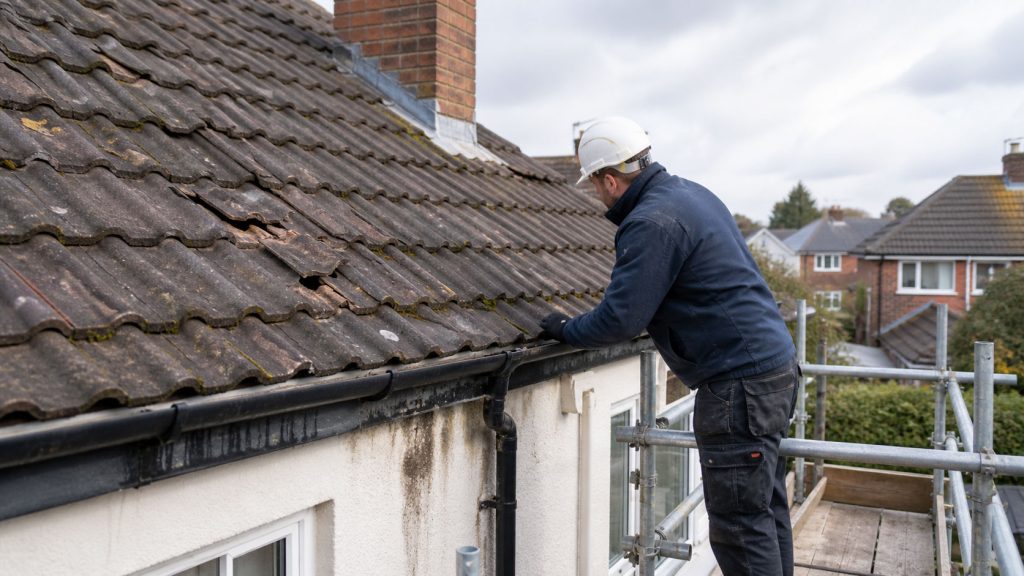
Your roof is one of those parts of the home you probably don’t think about much until there’s a problem. Most of the time, it just gets on with the job of keeping the rain, wind and cold out. But when something does go wrong, catching it early can save you a lot of hassle and money.
The tricky bit is knowing what to look for. Some roof problems are obvious, like water coming through the ceiling. Others are more subtle and can go unnoticed until they’ve caused damage inside the home.
Here are some of the most common signs that your roof may need attention.
You’ve Spotted a Leak or Damp Patch
This is usually the clearest sign that something isn’t right. A damp patch on the ceiling, staining on the wall or water dripping during heavy rain could mean water is getting in through the roof.
It might be caused by a broken tile, damaged flashing, worn felt, a chimney issue or a problem around a roof join. The source of a leak is not always directly above the damp patch either, as water can travel along beams or under felt before showing up inside.
The sooner it’s checked, the better. What starts as a small leak can quickly lead to damaged plaster, timber problems or mould if left too long.
Tiles Are Missing, Cracked or Slipped
Roof tiles are designed to overlap and protect your home from the weather. If one tile slips, cracks or comes loose, it can leave part of the roof exposed.
After strong winds or heavy rain, it’s worth having a quick look from ground level to see if anything looks out of place. You might notice a gap in the roof, a tile sitting at an odd angle or broken pieces on the ground.
Even one damaged tile can let water in, especially during a Stafford winter when rain and wind often come together.
The Ridge Tiles Look Loose
Ridge tiles sit along the top of your roof where two sides meet. Over time, traditional mortar can crack, crumble or come away, leaving ridge tiles less secure.
Loose ridge tiles can be a safety risk, particularly in bad weather. They can also allow water to get into the roof space if the bedding has failed.
Modern dry ridge systems are a popular option because they don’t rely on mortar in the same way. They are mechanically fixed, neat-looking and lower maintenance.
Guttering Is Overflowing or Pulling Away
Guttering problems are easy to ignore, but they can cause real issues if rainwater is not being carried away properly.
Blocked, leaking or sagging gutters can send water running down walls, into brickwork or around the roofline. This can lead to damp, staining and damage to fascias and soffits.
If you notice water spilling over the edge of your guttering, plants growing inside it or sections starting to pull away, it’s worth getting it sorted before it causes further problems.
Fascias and Soffits Are Rotting or Damaged
Your fascias and soffits sit around the edge of the roof and help protect the roofline. If they are old, rotten, cracked or damaged, they may no longer be doing their job properly.
Timber fascias in particular can suffer after years of exposure to rain. Once they start to rot, guttering can become loose and the edge of the roof may be more vulnerable to water damage.
Replacing old fascias, soffits and guttering can make a big difference to both the look and protection of your home.
Moss Is Building Up on the Roof
A bit of moss on a roof is common, especially on older properties or roofs that don’t get much sunlight. But heavy moss build-up can cause problems.
Moss can hold moisture, block gutters and, in some cases, disturb tiles as it spreads. During colder weather, trapped moisture can freeze and expand, putting extra pressure on the roof surface.
Moss removal can help keep your roof looking tidier and reduce the risk of blocked guttering.
Your Roof Looks Uneven or Tired
Sometimes, a roof simply starts to show its age. It may look uneven, sagging, heavily weathered or generally worn.
This doesn’t always mean you need a full new roof straight away, but it does mean it’s worth getting a professional opinion. A roofer can check the tiles, felt, battens, ridge, flashing and roofline to see whether repairs will be enough or whether replacement may be the better long-term option.
You’ve Had Recent Storm Damage
Strong winds, heavy rain and storms can expose weak spots in a roof very quickly. Even if you don’t see an obvious leak straight away, storm damage can loosen tiles, damage ridge sections or move flashing.
After bad weather, it’s a good idea to check for visible damage from the ground. Don’t climb onto the roof yourself. If anything looks unusual, ask a professional roofer to take a look safely.
Don’t Wait Until It Gets Worse
Roof problems rarely fix themselves. A small repair today can often prevent a much bigger job later.
If you’re unsure whether your roof needs repairing, it’s always better to ask. At A Stevens, we inspect roofs across Stafford and nearby areas, explain what we find in plain English and give honest advice on the best next step.
Whether it’s a slipped tile, leaking gutter, damaged flashing or a roof that just doesn’t look right, we’re happy to help.